Saturday, September 18, 2010

managing personal finances


Are you a fan of the GTD personal productivity system? Well if you like "Getting Things Done," here's GFD, Getting Finances Done, which shows you how to map David Allen's same principals to managing your personal finance and achieving your financial goals.


Applying GTD principles to your personal finances - Part 1 [Getting Finances Done]


Are you a fan of the GTD personal productivity system? Well if you like "Getting Things Done," here's GFD, Getting Finances Done, which shows you how to map David Allen's same principals to managing your personal finance and achieving your financial goals.


Applying GTD principles to your personal finances - Part 1 [Getting Finances Done]


eric seiger dermatologist how to lose weight fast penis extender

The Hockey <b>News</b>: Getting To Know: Getting To Know: Gordie Howe

Mr. Hockey answers questions about funny stories from his NHL career, plus his earliest hockey memories and more.

Denver Broncos <b>News</b> - Horse Tracks - 9/18/10 - Mile High Report

Your Daily Cup of Orange and Blue Coffee....Horse Tracks.

Baltimore Crime: Saturday crime <b>news</b>

Saturday crime news. State Senator Ulysses Currie pleaded not guilty to federal corruption charges. Triple stabbing on an MTA bus in West Baltimore. posted by ppatin at 11:07 AM ...


MABUHAY ALLIANCE HOST THE 6TH ANNUAL ECONOMIC DEVELOPMENT CONFERENCE by mabuhayalliance


Tuesday, September 14, 2010

personal finance budgets


Behold: the most profoundly pessimistic attack ad of 2010. Meg Whitman has delivered unto us a masterpiece of dirty politics.


What is most striking about this already-infamous ad isn't the boldness of its mendacity--though it certainly has that--but the cynicism of its timing. It's the sort of unabashedly nasty hit that one would expect just days before an election, and even then only from an outside interest group. Yet here it is, delivered to us in early September with Meg Whitman's name right there on the card. By not only producing so brazen a piece of misinformation but also airing it with more than enough time to effectively rebut, Whitman is betting the house on the politics of personal animosity.


If you live in California or happen to be a political junkie, you've no doubt seen it already and can skip the next paragraph. But for those of you who have avoided it (probably due to a weak stomach or some lingering, endangered shred of personal or political optimism) here's a recap:


Bill Clinton, in a 1992 debate, sits face-to-face with Jerry Brown. Brown looks at Clinton like a kid called to the principal's office. Clinton blasts Brown as a tax-raising liar: "CNN, not me, CNN says his assertion about his tax record was, quote, 'just plain wrong.' He raised taxes as Governor of California. He doesn't tell the people the truth." That's two levels of surrogate Whitman is hiding behind, for those of you keeping track. On its own, the ad is devastating.


There's just one little problem: That CNN report turned out to be "just plain wrong," and Whitman's campaign--like all interested parties--has been fully aware of that for some time. From what the San Jose Mercury-News has been able to piece together, the CNN report used the wrong years both in determining the base of comparison and in identifying the budgets Brown had control over. This made it seem Brown was responsible for a sizable tax increase during Reagan's last year in office and failed to give him credit for tax cuts later in his tenure. The LA Times and California Department of Finance also revisited the numbers and found them to be outright wrong, for the same reasons, in the same ways. Brown was telling the truth. He had cut taxes as Governor of California.


Whitman knew full well that the story was a lie, but she wanted to repeat it all the same. The excuse her communications director offered the Mercury-News: "Bill Clinton, not me, said Jerry Brown 'doesn't tell people the truth.'" Sound familiar?


But this ad is so much more perverse than any simple repetition of untruths. It practically baits a popular former president into entering the fray on the side of Whitman's opponent, yet rests comfortably on the belief that personal grievances and misgivings will trump ethics and ideology to prevent any serious intervention by Clinton or one of the nation's most popular fact checkers.


Yes, in case you missed it, there is yet another personality being ironically misused by this ad. Brooks Jackson, the reporter responsible for this particular "oopsie," now heads FactCheck.org. If you didn't already know that, give yourself a moment to let it sink in: The man whose erroneous report is still fueling factually-incorrect campaign advertisements nearly two decades later is also the guy we all run to when we question the veracity of claims in a political advertisement.


For his part, Jackson acknowledged the error on FactCheck.org in a manner only slightly more embarrassing than admirable. Unlike other political ads targeted by FactCheck, the correction has yet to warrant an actual article on the site. Jackson did, however, post a blog entry on the topic on one of the site's secondary pages. It fails to even mention the Clinton ad and generally reads more like a lengthy rationalization than a correction. He even works in the astonishing insinuation that Prop 13 was a reaction to Brown's high taxes. (Prop 13, patently a reaction to soaring property values and their impact on property tax rates, was not included in the figures used to correct Jackson's report.) After muddying the waters for seven paragraphs, he concludes that state taxes "increased during four of Brown's eight years, and during six of those years they were higher than before he took office. But they were lower during his final two years."


The Mercury-News, State Department of Finance and Associated Press see things a little differently. By about $16 billion in tax cuts during Brown's first seven years in office, and $4 billion in savings per year between 1978 and 1982. Not counting the savings from Prop 13. So much for a gentleman admitting he was wrong.


Not that Jackson matters much to Brown's campaign. Both Brown and Whitman know that only one man can make this ad backfire on Whitman: former president Clinton. Whitman is betting (perhaps unwisely, given Clinton's general election campaigning for Barack Obama,) that 18 years after their bitter battle for the Democratic nomination, Clinton still hates Brown so much that he will refuse defend him with any real conviction.


Exactly how acrimonious was the Clinton-Brown contest? The clip in Whitman's ad might be called one of its more friendly exchanges.


In what was widely taken as an allusion to Brown's onslaught of attacks on Clinton's character, Jesse Jackson opened one debate by chastising the candidates for getting too caught up in "attacks and counterattacks." It didn't slow Brown down. Later that evening, he accused Clinton of racial insensitivity for playing golf at a whites-only country club and using black prisoners as campaign props.


At the final debate, when Brown (not without his own, similar conflicts of interest,) accused Clinton of "funneling money to his wife's law firm," Clinton shot back, "You're not worth being on the same platform as my wife."


The highlight (or low point) of that debate was when Clinton said, "I feel sorry for Jerry Brown... He asked me to support him for President once." When a moderator asked if he did, Clinton didn't miss a beat before shooting back, "Of course not." Footage circulated from the night appears to show gathered reporters roaring with laughter. Whitman probably has that ad already in the can.


In an email blast from Brown's campaign the morning the ad came out, Brown was quick to let Clinton off the hook. The former president had "later learned" that the numbers were incorrect, according to the letter to supporters. But it's a lot easier for Jerry Brown to play nice for the sake of his own campaign than it will be for Bill Clinton, who doesn't need any favors, to come riding to Brown's rescue.


Is Clinton still unable to put the past behind him?


Pundits have pointed to his early support for Gavin Newsom over Brown as proof that he still holds a grudge. But was Clinton's support of Newsom the result of his decades-old feud with Brown, or of a more recently developed loyalty? Newsom was a very vocal, enthusiastic supporter of Hillary Clinton during the 2008 primaries.


Ironically, that support might have been born out of the former San Francisco Mayor's own feud with another Democratic president. In 2007, Newsom implied to Reuters that Obama, "As God is my witness, will not be photographed with me, will not be in the same room with me." At issue was Newsom's having granted marriage licenses to same-sex couples.


The Obama-Newsom feud was verified in early 2008, when Willie Brown (backed by several Newsom staffers) gave a much more detailed account of the disputed incident to the San Francisco Chronicle. Obama's campaign denied the accusation, telling Politico that the incoming president was so "pissed" over the stories that the new administration "may give San Francisco to Canada."


Newsom might well have supported Hillary Clinton just as enthusiastically regardless of his personal feelings about Obama. Still, it's tempting to imagine that his feud with the current president might have, just as much as Bill Clinton's animosity toward Jerry Brown, circuitously earned him the former president's support. In politics, there is seldom a single reason for anything, and with so many personal feuds and vendettas driving the nation's politics, it's more than a little difficult to keep straight which one is motivating whom and when.


Will Clinton step in? If he wants to keep that "team player" image he so carefully rebuilt during the 2008 general election, he'll have to. But will he do so looking like an angry, misused Brown supporter or a fellow Democrat forced by party allegiance to go through the motions? I don't know.


What I can say with certainty is that Meg Whitman doesn't even take seriously the possibility that Bill Clinton would rather campaign for Jerry Brown than be seen as the man responsible for costing Democrats the California governor's mansion.


Update: Around the time that this posted, stories about Brown's remarks about Clinton at a campaign event Sunday were beginning to spread. So it seems that Whitman was probably right. "No matter how cynical you become, it's never enough to keep up." - Lily Tomlin.


Behold: the most profoundly pessimistic attack ad of 2010. Meg Whitman has delivered unto us a masterpiece of dirty politics.


What is most striking about this already-infamous ad isn't the boldness of its mendacity--though it certainly has that--but the cynicism of its timing. It's the sort of unabashedly nasty hit that one would expect just days before an election, and even then only from an outside interest group. Yet here it is, delivered to us in early September with Meg Whitman's name right there on the card. By not only producing so brazen a piece of misinformation but also airing it with more than enough time to effectively rebut, Whitman is betting the house on the politics of personal animosity.


If you live in California or happen to be a political junkie, you've no doubt seen it already and can skip the next paragraph. But for those of you who have avoided it (probably due to a weak stomach or some lingering, endangered shred of personal or political optimism) here's a recap:


Bill Clinton, in a 1992 debate, sits face-to-face with Jerry Brown. Brown looks at Clinton like a kid called to the principal's office. Clinton blasts Brown as a tax-raising liar: "CNN, not me, CNN says his assertion about his tax record was, quote, 'just plain wrong.' He raised taxes as Governor of California. He doesn't tell the people the truth." That's two levels of surrogate Whitman is hiding behind, for those of you keeping track. On its own, the ad is devastating.


There's just one little problem: That CNN report turned out to be "just plain wrong," and Whitman's campaign--like all interested parties--has been fully aware of that for some time. From what the San Jose Mercury-News has been able to piece together, the CNN report used the wrong years both in determining the base of comparison and in identifying the budgets Brown had control over. This made it seem Brown was responsible for a sizable tax increase during Reagan's last year in office and failed to give him credit for tax cuts later in his tenure. The LA Times and California Department of Finance also revisited the numbers and found them to be outright wrong, for the same reasons, in the same ways. Brown was telling the truth. He had cut taxes as Governor of California.


Whitman knew full well that the story was a lie, but she wanted to repeat it all the same. The excuse her communications director offered the Mercury-News: "Bill Clinton, not me, said Jerry Brown 'doesn't tell people the truth.'" Sound familiar?


But this ad is so much more perverse than any simple repetition of untruths. It practically baits a popular former president into entering the fray on the side of Whitman's opponent, yet rests comfortably on the belief that personal grievances and misgivings will trump ethics and ideology to prevent any serious intervention by Clinton or one of the nation's most popular fact checkers.


Yes, in case you missed it, there is yet another personality being ironically misused by this ad. Brooks Jackson, the reporter responsible for this particular "oopsie," now heads FactCheck.org. If you didn't already know that, give yourself a moment to let it sink in: The man whose erroneous report is still fueling factually-incorrect campaign advertisements nearly two decades later is also the guy we all run to when we question the veracity of claims in a political advertisement.


For his part, Jackson acknowledged the error on FactCheck.org in a manner only slightly more embarrassing than admirable. Unlike other political ads targeted by FactCheck, the correction has yet to warrant an actual article on the site. Jackson did, however, post a blog entry on the topic on one of the site's secondary pages. It fails to even mention the Clinton ad and generally reads more like a lengthy rationalization than a correction. He even works in the astonishing insinuation that Prop 13 was a reaction to Brown's high taxes. (Prop 13, patently a reaction to soaring property values and their impact on property tax rates, was not included in the figures used to correct Jackson's report.) After muddying the waters for seven paragraphs, he concludes that state taxes "increased during four of Brown's eight years, and during six of those years they were higher than before he took office. But they were lower during his final two years."


The Mercury-News, State Department of Finance and Associated Press see things a little differently. By about $16 billion in tax cuts during Brown's first seven years in office, and $4 billion in savings per year between 1978 and 1982. Not counting the savings from Prop 13. So much for a gentleman admitting he was wrong.


Not that Jackson matters much to Brown's campaign. Both Brown and Whitman know that only one man can make this ad backfire on Whitman: former president Clinton. Whitman is betting (perhaps unwisely, given Clinton's general election campaigning for Barack Obama,) that 18 years after their bitter battle for the Democratic nomination, Clinton still hates Brown so much that he will refuse defend him with any real conviction.


Exactly how acrimonious was the Clinton-Brown contest? The clip in Whitman's ad might be called one of its more friendly exchanges.


In what was widely taken as an allusion to Brown's onslaught of attacks on Clinton's character, Jesse Jackson opened one debate by chastising the candidates for getting too caught up in "attacks and counterattacks." It didn't slow Brown down. Later that evening, he accused Clinton of racial insensitivity for playing golf at a whites-only country club and using black prisoners as campaign props.


At the final debate, when Brown (not without his own, similar conflicts of interest,) accused Clinton of "funneling money to his wife's law firm," Clinton shot back, "You're not worth being on the same platform as my wife."


The highlight (or low point) of that debate was when Clinton said, "I feel sorry for Jerry Brown... He asked me to support him for President once." When a moderator asked if he did, Clinton didn't miss a beat before shooting back, "Of course not." Footage circulated from the night appears to show gathered reporters roaring with laughter. Whitman probably has that ad already in the can.


In an email blast from Brown's campaign the morning the ad came out, Brown was quick to let Clinton off the hook. The former president had "later learned" that the numbers were incorrect, according to the letter to supporters. But it's a lot easier for Jerry Brown to play nice for the sake of his own campaign than it will be for Bill Clinton, who doesn't need any favors, to come riding to Brown's rescue.


Is Clinton still unable to put the past behind him?


Pundits have pointed to his early support for Gavin Newsom over Brown as proof that he still holds a grudge. But was Clinton's support of Newsom the result of his decades-old feud with Brown, or of a more recently developed loyalty? Newsom was a very vocal, enthusiastic supporter of Hillary Clinton during the 2008 primaries.


Ironically, that support might have been born out of the former San Francisco Mayor's own feud with another Democratic president. In 2007, Newsom implied to Reuters that Obama, "As God is my witness, will not be photographed with me, will not be in the same room with me." At issue was Newsom's having granted marriage licenses to same-sex couples.


The Obama-Newsom feud was verified in early 2008, when Willie Brown (backed by several Newsom staffers) gave a much more detailed account of the disputed incident to the San Francisco Chronicle. Obama's campaign denied the accusation, telling Politico that the incoming president was so "pissed" over the stories that the new administration "may give San Francisco to Canada."


Newsom might well have supported Hillary Clinton just as enthusiastically regardless of his personal feelings about Obama. Still, it's tempting to imagine that his feud with the current president might have, just as much as Bill Clinton's animosity toward Jerry Brown, circuitously earned him the former president's support. In politics, there is seldom a single reason for anything, and with so many personal feuds and vendettas driving the nation's politics, it's more than a little difficult to keep straight which one is motivating whom and when.


Will Clinton step in? If he wants to keep that "team player" image he so carefully rebuilt during the 2008 general election, he'll have to. But will he do so looking like an angry, misused Brown supporter or a fellow Democrat forced by party allegiance to go through the motions? I don't know.


What I can say with certainty is that Meg Whitman doesn't even take seriously the possibility that Bill Clinton would rather campaign for Jerry Brown than be seen as the man responsible for costing Democrats the California governor's mansion.


Update: Around the time that this posted, stories about Brown's remarks about Clinton at a campaign event Sunday were beginning to spread. So it seems that Whitman was probably right. "No matter how cynical you become, it's never enough to keep up." - Lily Tomlin.


penis extender

Samsung NX100 mirrorless compact launched and previewed: Digital <b>...</b>

Samsung NX100 mirrorless compact launched and previewed: Samsung has announced the addition of the NX100 to its NX series of mirrorless interchangeable lens cameras. It features the same 14.6Mp sensor and 3.0" OLED screen as the NX10, ...

Good <b>News</b>: People Are Consuming More <b>News</b> «

The woes of the traditional media industry have fuelled concerns that traditional offline news sources are being replaced by online sources. But a new study by the Pew Center has found that online news consumption has actually increased ...

Bloomberg <b>News</b> Hops Aboard Yahoo Finance

Perhaps to get a piece of its 45.6 million monthly uniques?


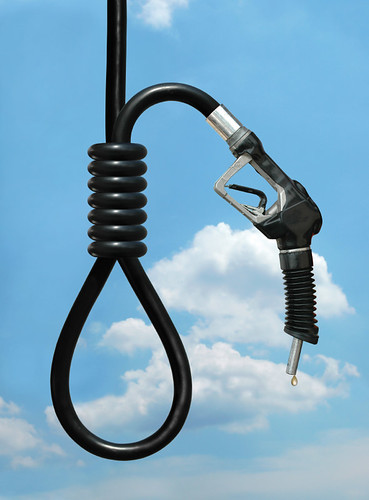
The Cost of Gasoline by hidayat_peje7


internet marketing course

Samsung NX100 mirrorless compact launched and previewed: Digital <b>...</b>

Samsung NX100 mirrorless compact launched and previewed: Samsung has announced the addition of the NX100 to its NX series of mirrorless interchangeable lens cameras. It features the same 14.6Mp sensor and 3.0" OLED screen as the NX10, ...

Good <b>News</b>: People Are Consuming More <b>News</b> «

The woes of the traditional media industry have fuelled concerns that traditional offline news sources are being replaced by online sources. But a new study by the Pew Center has found that online news consumption has actually increased ...

Bloomberg <b>News</b> Hops Aboard Yahoo Finance

Perhaps to get a piece of its 45.6 million monthly uniques?


big white booty

The Cost of Gasoline by hidayat_peje7


Sunday, September 12, 2010

Making Money Jobs


What passes for business reporting in the United States is too often a series of breathless reports about the stock market. When the Dow rises precipitously, as it did today (Wednesday), the business press predicts an end to the Great Recession. When the stock market plummets, as it did last week, the Great Recession is said to be worsening.


Pay no attention. The stock market has as much to do with the real economy as the weather has to do with geology. Day by day there's no relationship at all. Over time, weather and geology interact but the results aren't evident for many years. The biggest impact of the weather is on peoples' moods, as are the daily ups and downs of the market.


The real economy is jobs and paychecks, what people buy and what they sell. And the real economy -- even viewed from a worldwide perspective -- is as precarious as ever, perhaps more so.


Today's rally was triggered by news that one of China's official measures of its growth -- its Purchasing Managers Index -- rose. The index had been in decline for three straight months.


Why should an obscure measurement on the other side of the world cause stock markets in New York, London, and Frankfurt to rally? Because China is so large and its needs seemingly limitless that its growth has been about the only reliable source of global demand.


Many big American companies have been showing profits because they're doing ever more business in China while cutting payrolls at home. American consumers aren't buying much of anything because they've lost their jobs or are worried about losing them, and are still trying to get out from under a huge debt load (the latest figures show more consumer debt delinquent now than last year and a surge in personal bankruptcies). The U.S. housing market is growing worse, auto and retail sales are dropping, and the ranks of the jobless continue to swell.


Europe is in almost as much a mess. The problem there isn't just or even mainly that Greece and other nations on the "periphery" have too much public debt. A bigger problem is European consumers aren't buying nearly enough to generate more jobs. Unemployment remains high, and the trend is bad. Manufacturing growth there has slowed to its weakest pace in six months. Yet bizarrely, Europe's large economies -- Britain, Germany, and France -- are paring back their public budgets. It's exactly the wrong time, and a recipe for disaster.


Germany's so-called "job miracle" (as Chancellor Angela Merkel calls it) is more mirage than miracle. Most of the gains in employment there have come from part-time jobs, often at low pay. Average annual net income per German employee continues to drop. This explains why domestic demand there is so sluggish and why Germany is desperately dependent on its exports of machinery and manufacturing components to Asia, especially China.


Meanwhile, Japan, now the world's third-largest economy, is a basket case. Japanese consumers aren't buying much of anything, and why would they? The country is still in the grip of a deflationary cycle that shows no end. Japanese consumers reason if they can buy it cheaper next week there's no reason to buy now. Basically the only thing keeping Japan's economy going are its exports of cars and electronic components to China.


Australia is booming, but look closely and you see the same buyer. Australia is making a boatload of money selling its minerals and raw materials to China (Australia is fast becoming one big Chinese mine shaft). The Brazilian economy is soaring. Why? Exports of wheat and cattle to China. Middle East oil producers are getting richer. Why? China's insatiable thirst for oil.


Elsewhere around the globe the picture is as uncertain. Much of Pakistan is under water. Much of the rest of the Middle East is under tyrannical or corrupt regimes. Russia has suffered such a dry spell it's hoarding wheat. Despite its wealthy few, India's masses are still terribly poor.


The stock market could plunge tomorrow or the next day because the world's economic fundamentals are so precarious.


The global economy cannot be sustained by one big, voracious nation -- especially one that's suffering bouts of civil unrest, actively repressing dissent, suffocating under a blanket of pollution and coping with other environmental hazards, and whose biggest companies are run by the state.


This post originally appeared at RobertReich.org.


President Obama's plan for fixing America's badly-worn transportation infrastructure is not, as some critics have asserted, simply throwing more taxpayer money down the rabbit hole.


In fact, if implemented correctly, it could not only help us make up for a lot of lost time re-building a critical component of our economy, make us more competitive in the global marketplace, and serve as economic "game-changer," a fundamental re-orientation of how we structure long-range industrial policy.


Right now, most people are focused on jobs. U.S. unemployment rose to 9.6 percent in August, and for the construction industry, that figure is 17 percent, nearly double. What's worse, those numbers may continue upward when the money from the first stimulus package runs out. In short, far too many Americans are not going back to work tomorrow.


Rebuilding our third-rate transportation infrastructure will also help us catch up with established competitors like Germany and up-and-coming players like China, Brazil, and India. Those nations are investing in their economies and their future competitiveness by putting money into modern ports, freight rail, and other infrastructure. Right now, there are serious question about whether U.S. infrastructure can deliver the level of service American businesses need.


Finally, there is the matter of practical policy. The latest extension of our nation's transportation law runs out at the end of this year. In this toxic political environment, it may be impossible to get a renewal, which could force a shutdown of the program, as was the case earlier this year, and put thousands of existing jobs in jeopardy. Washington must show leadership now.


An effectively-designed infrastructure initiative can stabilize and strengthen our economy beyond the current crisis. Smart investments can generate productive, sustainable and inclusive growth. A strategy of "invest and reform" would ensure that infrastructure investments were driven by market logic, factual evidence, and performance rather than the greatest short-term political reward.


Does President Obama's plan do all these things?


The good news--there are several key reforms that promise to change the way transportation infrastructure projects are funded and chosen on the federal, state, and metropolitan levels: A merit-driven National Infrastructure Bank could be the vehicle for green-lighting projects that have the highest return on investment, rather than the greatest political reward. Another round of projects that support bottom-up decision-making linking transportation, housing, energy, and environmental concerns. A program for transportation modeled after the Education Department's Race-To-The-Top initiative that could instill meaningful reforms on the state level, where most decisions are made.


The investments in high-speed rail and next-generation air traffic control are important in that they begin to shift focus away from small-bore spending to the kind of transformational investments the federal government should be focusing on. Linking high speed rail to the rest of the transportation program will help us begin to think of these siloed investments as a holistic system.


Obviously, the big challenge is how to get this done. Effective transportation policy in the U.S. does not lack for good, practical ideas. It lacks funding, or, more accurately, it lacks interest in raising taxes to generate the funding. Most of what the president proposed is traditionally funded by the tax on gasoline. But as driving declines, and as more fuel-efficient cars mean we're consuming less gas, there's much less money overall.


President Obama has taken any gas tax increase off the table, proposing instead to repeal the domestic manufacturing deduction for oil and gas production. This may be enough to fund parts of the president's plan, but it is short of the comprehensive package we need.


We need to hear more about what the administration's priorities are for the long-term reauthorization of the transportation law. Again, there is no shortage of ideas. There's a draft bill in the House, and likely to be one in the Senate. Three national commissions have weighed in on this.


We need to know how the program--largely the same framework used to build the interstates a couple of generations ago--will be updated to reflect the realities of 21st century metropolitan America.


Finally, we need a frank conversation about how we're going to pay for all this, and then to exercise the will to do that. A jump start now is no good if we stall again down the road.


eric seiger

AMERICAblog <b>News</b>: Microsoft helping Russians stifle progressive <b>...</b>

News and opinion about US politics from a liberal perspective.

Breaking <b>News</b>: CDC Concedes Vaccines Result in Autism. - Fighting <b>...</b>

I am sure this news report (ahem, truth) won't be sensationalized by the media or will be a 5 second blip that is forgotten or as my friend Ginger would say 'some sort of internet sewer alligator monster must have climbed up from the ...

Weekly <b>News</b> Roundup: Apple Inc. (NASDAQ:AAPL)

Weekly News Roundup: Apple Inc. (NASDAQ:AAPL). Monday 6 September. The 'Apple Inc. (NASDAQ:AAPL) Revolution' continued: 1 million Ping users in 48 hours. Although Ping, the music centric social network, is not available in many ...


Saturday, September 11, 2010

Great News For Dr. Eric Seiger CiOzes

Dr. Eric Seiger is an experienced board-certified dermatologist and a highly skilled cosmetic surgeon. He has long been a eric seiger community leader in medical education and training, as a faculty member of the prestigious Dermatology Residency Program at Pontiac Osteopathic Hospital.


eric seiger


In addition to his private practice, Dr. Eric S. Seiger continues an affiliation with the Pontiac Osteopathic Hospital's Dermatology Residency Program as a senior faculty member. He is also a Clinical Assistant Professor at Michigan State University. Dr. Eric S. Seiger is committed to providing services that enhance communities by opening up new opportunities for his clients. Dr. Eric S. Seiger established Freedom Ink, which provides free tattoo removal procedures for former gang members.


eric seiger

Thursday, September 9, 2010

foreclosure auctions

Recently I went to visit an acquaintance who was trashing out his own condo. There were hinges to be pried out of doorways and appliances to take for eBay. The house had become inert, a non-house: trapped somewhere between the building's association who wanted the fees owed to pay for the building's roof and walls and the like, the people who wanted the property taxes to pay for things like schools and street lights and roads and the people who were in charge of collecting (or more likely not collecting) the mortgage for whomever actually owned the mortgage debt (at the end of that chain, quite possibly you and me). These various claimants made the house largely worthless—more worthless than the latest assessment, which was… well, a comparable apartment nearby had recently sold for $120,000. It had been listed at $325,000 in May, 2009. That $120,000 sale price was not much higher than that apartment's last sale—twenty years ago.


Anyway, it was somewhat likely that, after the investment of some work on this apartment that was being trashed out, such as providing it with new door hinges and appliances, the association would find a renter unafraid of a possibly surprising ending to his rental agreement term in exchange for a below-market rent. That would be a best outcome.


The others would most likely find no purchase for their attempts to collect (the owner was protected by bankruptcy), and certainly the bank had little incentive to collect the mortgage, although their claims on the title would likely make finding a purchaser difficult.


One of the few chairs remaining in the near-vacant condo was occupied by someone on the other side, as it were. Someone not in bankruptcy, for one thing. This person had recently made a $200,000 offer on two-bedroom apartment in a nice part of town. (Needless to say, this town was not New York City.)


But when he had gone to get a mortgage, the bank had balked, because that apartment now assessed at half that value, and so now his current offer for the two-bedroom was at something like $78,000, having come up from something like $65,000 or $72,000. That offer number was jiggling and that title too was somewhat not entirely not cloudy, because that condo association was trying to get a bit of the sale money for past unpaid maintenance under the old owner, which seems, if logical, a bit short-sighted of the association's best interests. They ran the risk of receiving zero dollars instead of some dollars, by dragging the potential new owner into someone else's debt.


But then, we're pretty much all subject to someone else's debt these days, even those of us who rent. Renters are shielded from what is happening with a property, except when they receive a stray envelope addressed to their landlords, or the records pop up online—and the record-keeping systems, when I look up mortgages and sales online, seem to me to be bogged down and very tardy. I imagine the one or two municipal employees in each town in America with the responsibility of making these things public crouched in some little cave, with a stack of depressing white and red and yellow paper towering over their little desks. (Really, it's probably all done by computers. With near- or off-shored labor—somewhere in Utah or Israel.)


In any event, there it was: the magical $78,000 two-bedroom apartment. The steal of a lifetime. The great American get-ahead.


I bring this up in part because this Sunday, at the Brooklyn Book Festival, there is a panel at noon which includes Naomi Klein and Kurt Andersen and Jordan Flaherty and also Paul Reyes. His new book, Exiles in Eden—some of which is in the August issue of Harper's—is an account of going to work for his father, who has for some time now been a trasher-outer of abandoned and foreclosed homes. In the book, Reyes follows the trail of breadcrumbs of the people who've abandoned or been evicted from their houses to the foreclosure auctions, and along the way meets people like the housing advocates who've installed squatters in vacant properties.


(The panel is slotted against "Me… In The World," which stars Sam Lipsyte, and a panel called "Pop Life: Music, Memory, and America’s Coming of Age," with Ta-Nehisi Coates, which may be more appealing and relaxing and better-attended, but then we all have to make difficult choices in these times.)


Reyes did the first reading from his book the other week and something odd happened. He did not get author-friendly questions about the precious process of writing his book. Instead, a long discussion ensued among the audience members about the financial system and the housing market. In the audience were brokers and bankers and homeowners and renters. A mass of anecdotage and experience and theory was shared. It was something like an impromptu consciousness-raising session, very thorough, and when the audience left, everyone had had time to sift through his and her experiences with the state of our financial system and to incorporate some fresh input.


"The audience reaction was exactly what I'd hoped for," Reyes wrote to me the other day. "I'm certainly happy to stand up there and blather for twenty minutes, but I'd much rather have an intense discussion about this issue and hear what people have been through and what their ideas are."


Although he'll be taking this conversation to the Times' Opinionator blog's Living Rooms section soon, he does not have at this time many in-person readings scheduled; author reading tours are not booked by publishers much these days.


"I'm trying to work the promotion of the book into a split personality tour of sorts–between the narrative journalist and housing wonk," Reyes wrote. "If all goes well, I'll drop in on university classes in the daytime, then hit the bookstores at night. I'll wear a different pair of glasses for each role, of course."


Next week, on the 14th, Reyes will be reading as well at the Enoch Pratt Library in Baltimore. Perhaps you'd like him to visit your fine local bookstore, classroom or community center. His email address is on his website.


Realtors are not reporting the true sold prices on homes.  Here are 2 examples.  If a home is listed on the MLS and then sells at a auction like Hudson & Marshal or RealtyBid, you can see the sold price online or if you attend the live auctions, see the house sell at open outcry auction.  The next day the houses are reported sold on the MLS but always at full price.

The example below sold for $115,000 at Realtybid but is listed as sold for $159,500 on the MLS.

Also, homes are listed on the MLS and sold on the HUD site.  You can see the sold area on HUD and the Bid Stats.  The house listed below sold on the Hud site for $90,061 but again was listed as sold for full price on the MLS $113,400.

These are only 2 examples, I have seen over 100 and assume it is occurring everywhere.  I understand that foreclosures are not included in the sales stats from the Realtor Assoc. but the stats they use are taken from the sold prices listed on the MLS.  They are all false.

Simply said, this means that any pricing data coming off Multiple Listing Services is fatally flawed, and if this observation is verified, could potentially be a simplistic means to misrepresent the true home price by up to 40% higher.

As for the examples, here is property 1 as represented by the MLS: note the price of $159,500

And below is the actual final auction price on the exact same property taken from RealtyBid:

The MLS certainly pulled all the correct information on the property... all except for the price.

Another example: 5572 Goodhue Ave, Rockford IL 61109. The house was sold in auction for a purchase price of $90,061 as the below screenshot from the HUD auction indicates:

Yet the very same property was listed on foreclosure.com, and subsequently pulled by Zillow, as having a value of $113,400

These are merely two examples.

We have a simple question: which price is the NAR, Case-Shiler, and every other resi real estate index service pulling: the higher or the lower. For the ongoing credibility of the suddenly green shoot free recoveryless recovery, we at least hope it is the correct one. Which is why we ask readers to advise us of any comparable bifurcations between paid and listed price on properties they may be aware of.

Suddenly David Rosenberg's claim that no properties over $750,000 sold in the past month doesn't seem all that outlandish...


eric seiger

Z on TV: Fox <b>News</b> says it will not cover burning of Quran - TV <b>...</b>

Gentlemen: While I often find myself at odds with the opinions of your news network, I applaud your decision not to cover the Koran burning insanity. You are starving the attention-craving beast, precisely as necessary. Congratulations! ...

Betaworks and The Times Plan a Social <b>News</b> Service - NYTimes.com

Betaworks, a technology incubator in New York, is teaming up with The New York Times to introduce a social news service.

Small Business <b>News</b>: In The Trenches

Small business owners are in the trenches everyday creating businesses that change the world or their little corner of it. Starting a small business involves.


Wednesday, September 8, 2010

how to lose weight fast in one month

Many people who want to lose weight will ask themselves the question do I need to exercise to lose weight? This is a common question and the answer to that is relatively simple. Losing weight requires a combination of factors and exercise is one of them. It is crucial

have two or three snacks in between meals. There is no measuring portion sizes or counting calories with the plan.Your meals are normal size , enough to satisfy your hunger.
Phase one is the strictest part of the diet. After phase one you should notice a weight loss of some 8 to 12 pounds from where you started.
After initial two weeks on the program those cravings for the sugars and bad carbs will be gone and by just modifying what you eat you will continue to lose weight.
Upon entering phase two of the diet you can start

First of you must know that you did gain all of those weight because of the foods you eat. Not only that but how and when you eat your food. The first thing that you need to do is overhaul your meal plans. Create a meal plan of your own if you don't have one. You must eliminate all of the unhealthy foods that you eat, especially foods that are rich on fats and oil. Include fruits and vegetables in your meals. These are very rich in vitamins and minerals that the body needs. It is also a great source of fiber. Most important of all that you don't ever skip a meal. When you miss a meal your body goes to what they call a "starvation mode". When the body experience hunger, it will make you rebound or eat more in your next meal then instead of using the food as energy it will store the food turning it into fats. Keep your stomach guessing on when is the next meal by eating more often during the day. That doesn't mean you have to eat more. What I'm trying to say is that you should have at least 2 or 3 small snacks besides your 3 regular meals.

Nothing works on How to Lose Weight Fast more than doing a regular exercise. Most people expect that you have to go to the gym when you do some exercise. There are many ways that you could do some exercise without spending money how to lose weight fast by going into a gym. If you have a treadmill at home you could use it and start running for at least 30minutes a day. If you don't have a treadmill then you could run on the park. It is more effective if you could have your exercise before eating your breakfast. Weight lifting could not only make your muscles work but is a great way to increase your metabolism rate.

The future of search: <b>news</b> before you know you want it | Econsultancy

Google may be king of search, but the company's executives aren't satisfied to reign over the current search market. They want to redefine it. Speaking at Berlin's IFA home electronics event on Tuesday, Google CEO Eric Schmidt explained ...

Bernard-Henri Lévy: <b>News</b> of Sakineh

Happy are those who, calm and filled with the confidence of strong minds, feel capable of telling us that the threat is past, that there will be no execution. Her former attorney, knows no such thing.

Vaccines for the 2010-2011 Influenza Season Approved by FDA | <b>News</b> <b>...</b>

The FDA announced hat it has approved vaccines for the 2010-2011 influenza season in the United States. Seasonal influenza vaccine protects against three.


Sauropus androgynus 's flower close up ... Bông rau Ngót chụp gần ... by jesuismal / Plants of Vietnam, Flowers of Vietnam


yNHxqF

Tuesday, September 7, 2010

how to lose weight fast for wrestling

If you put your muscles through actions that make them stronger and more tone then they will respond. Meaning if you are sitting the majority of your time or you are not taxing your muscles to help them grow then they will stay in the state that they are in. So you can lose bodyfat without achieving a toned look if you remain sedentary. That is why exercise is so important

A Doctor from the South Beach area of Florida has designed, developed and successfully used a diet that the average person can use and have quick results. His name is Arthur Agatston, M.D.
The program is called the South Beach Diet and and millions of

First of you must know that you did gain all of those weight because of the foods you eat. Not only that but how and when you eat your food. The first thing that you need to do is overhaul your meal plans. Create a meal plan of your own if you don't have one. You must eliminate all of the unhealthy foods that you eat, especially foods that are rich on fats and oil. Include fruits and vegetables in your meals. These are very rich in vitamins and minerals that the body needs. It is also a great source of fiber. Most important of all that you don't ever skip a meal. When you miss a meal your body goes to what they call a "starvation mode". When the body experience hunger, it will make you rebound or eat more in your next meal then instead of using the food as energy it will store the food turning it into fats. Keep your stomach guessing on when is the next meal by eating more often during the day. That doesn't mean you have to eat more. What I'm trying to say is that you should have at least 2 or 3 small snacks besides your 3 regular meals.

Nothing works on How to Lose Weight Fast more than doing a regular exercise. Most people expect that you have to go to the gym when you do some exercise. There are many ways that you could do some exercise without spending money how to lose weight fast by going into a gym. If you have a treadmill at home you could use it and start running for at least 30minutes a day. If you don't have a treadmill then you could run on the park. It is more effective if you could have your exercise before eating your breakfast. Weight lifting could not only make your muscles work but is a great way to increase your metabolism rate.

AP Begins Crediting Bloggers as <b>News</b> Sources

In a letter to its members last week, Associated Press made the announcement that bloggers should be cited as a news source. This is a significant move from the AP, given that they have a history of not exactly 'getting on' with ...

Fox <b>News</b> Launching Weekly World Trade Center Series That Lasts <b>...</b>

We've heard a lot recently about the area a few blocks from Ground Zero, but what about Ground Zero itself? We got an early look at a special series Fox News is starting today focusing on the various buildings going up at the former ...

Run app updates: <b>News</b> on the Nike+, Runkeeper, and Runmeter fronts

Breaking news Feed. iTunes 10. It lives; Game Center coming in iOS 4.1, Epic Games working on Project Sword; iPad OS will be revved to 4.2 in November, unifies the line; New AppleTV delivers on $99 price point, streaming ...


the friction of fiction: chpt. XVII by static bob